

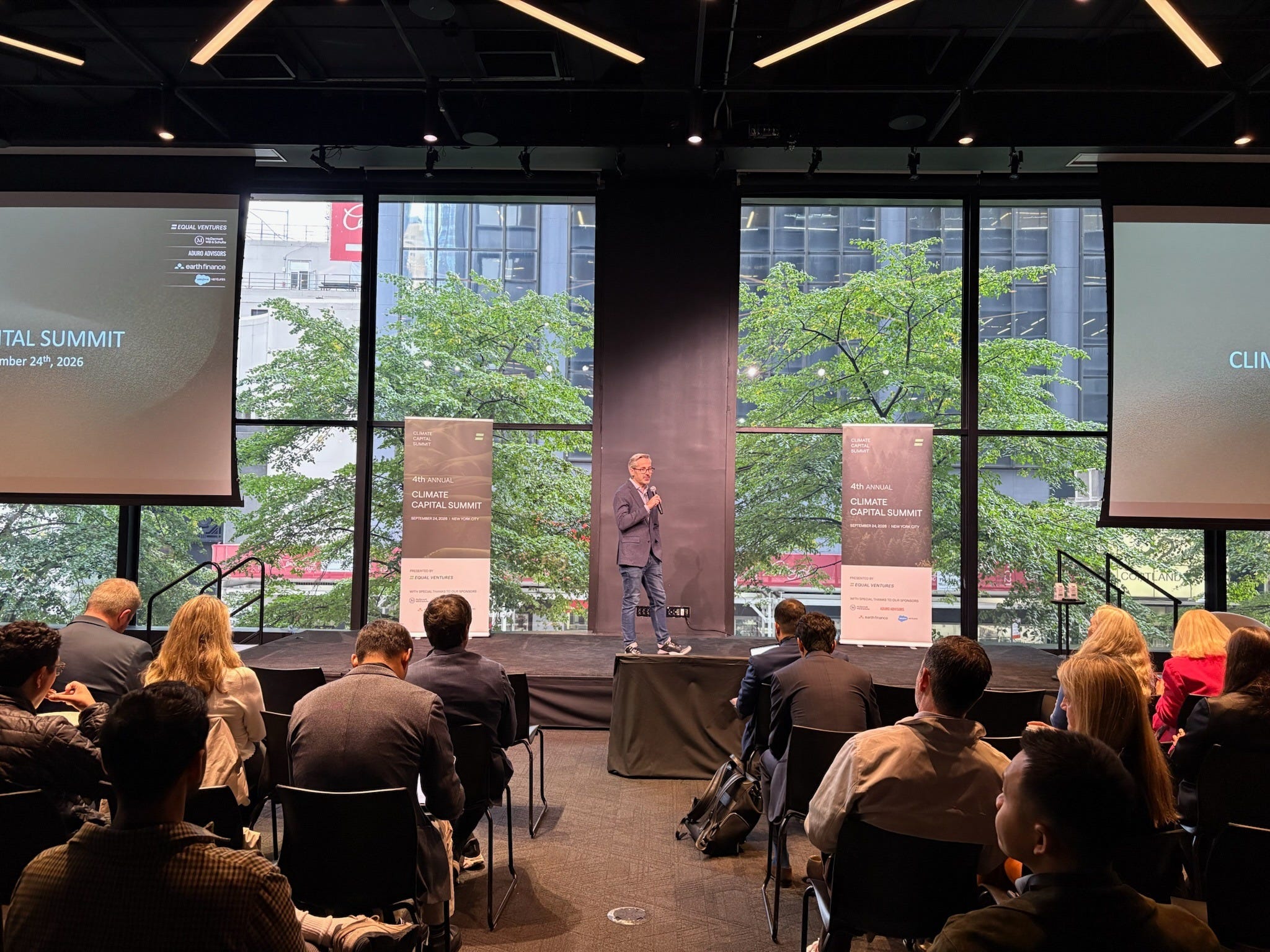
Another New York Climate Week is in the books, and once again the conversation started with that same word it always has - “Climate.” It remains one of the most politically charged labels in today’s environment and at this point everyone in the room at this year’s Climate Capital Summit knew it, and still more than 3,500 people applied for roughly a few hundred seats anyway.
This consistent demand speaks volumes to where we are at in the deployment cycle. The semantic debate over what is defined by climate, and what isn’t, has never changed the underlying need. Economies that want to grow need more energy, more energy requires more infrastructure, and more infrastructure requires builders willing to keep building through the noise.
That thread greatly resonated in this year’s version of our 4th annual Climate Capital Summit. The several themes that followed largely tracked the rest of the week:
1. The reset of the real economy
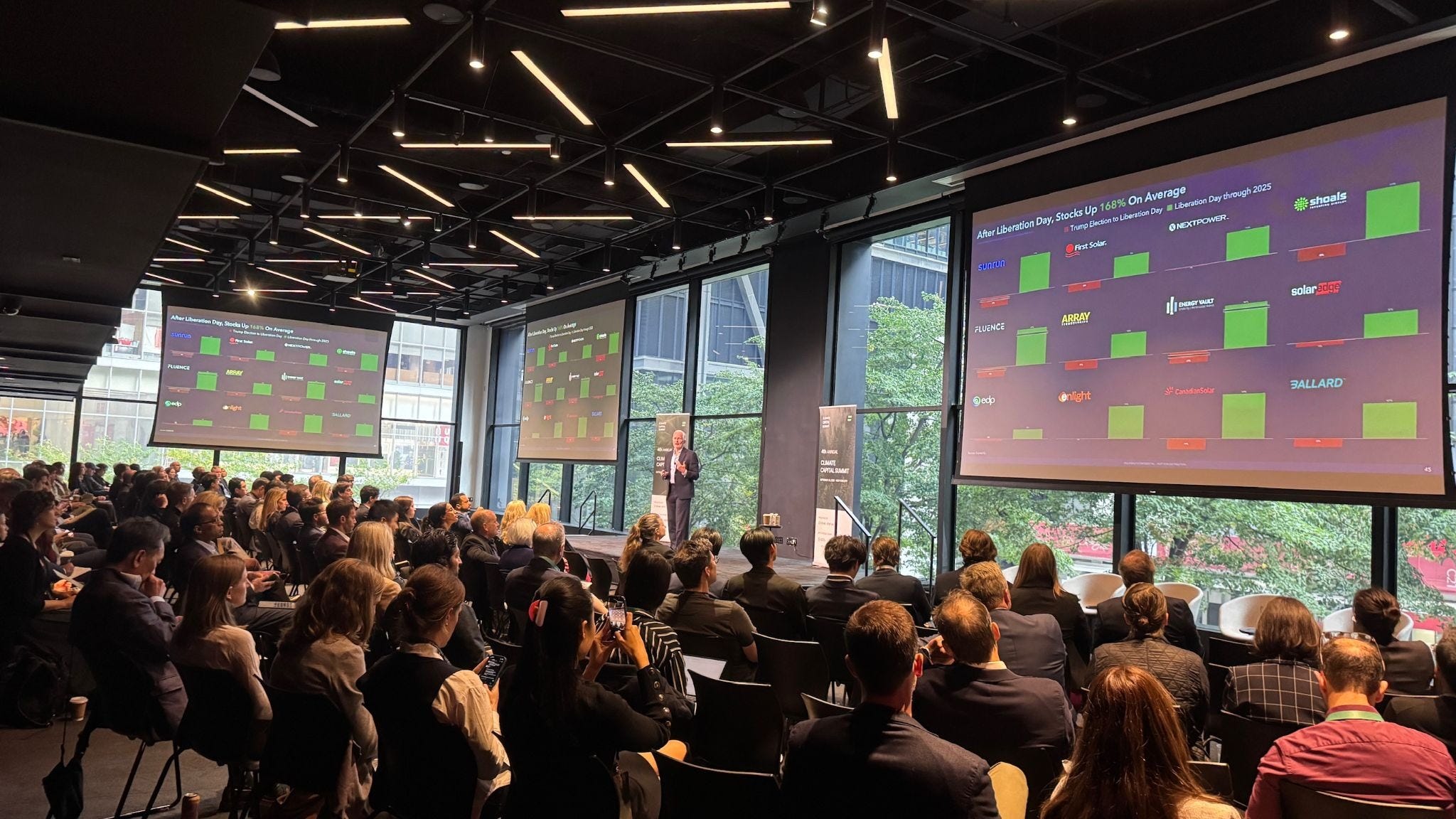
The punchline of the entire day was hit first by Jim Coulter whose keynote address framed the moment as three converging waves: decarbonization, deglobalization, and electrification (TPG). Any one of them alone could be a meaningful investment cycle; however, in aggregate they are forcing a repricing of the physical economy after decades in which capital flowed overwhelmingly toward asset-light models.
The irony is that AI, the most asset-light story of all (on the surface), is what broke the pattern. Software finally ran into physics and the requirement of supporting physical infrastructure. Jim’s point, made through a set of Instagram memes that drew more laughs than any keynote on industrial policy has a right to, was that this is a different paradigm from the “energy transition” as it was sold a few years ago. In fact, it’s a simpler one: add electrons. “Reset” feels like the perfect word, because resets are rarely gentle nor smooth. Some of the companies funded last cycle were built for a world of pledges and subsidies, and they won’t all make it to the next one. The survivors will be the ones that make the physical economy cheaper, faster, or more resilient, which, labels aside, is what the best climate companies were always doing.
2. Power remains the bottleneck
No financier need be reminded of the scale of the AI buildout. Aggregate hyperscaler capex is expected to exceed $690 billion this fiscal year, and incremental debt has risen from 9% of capex in FY24 to 32% over the twelve months to mid-2026 (FactSet). The balance sheets that once self-funded this cycle are now leaning on credit markets to keep pace.
Energy is not the largest line item in that spend, but it has become the one that sets the timeline, from permitting and construction to utilities balancing rates for households and C&I customers who hadn’t planned for mass data center rollout. That tension came together in our Utility 2.0 panel: the grid now has to be responsible and performant, not just reliable. Kraken is a great example, it used consumer flexibility as a bridge to utility flexibility, operating inside Octopus for years before breaking out, and showed that flexibility only scales when data moves cleanly between devices, customers, and utilities. In the U.S., Texture (an Equal portfolio company) is building that layer, much as SWIFT and IBAN turned bespoke bank-to-bank integrations into infrastructure. Whoever owns that transaction layer will sit underneath much of the value created at the grid edge.
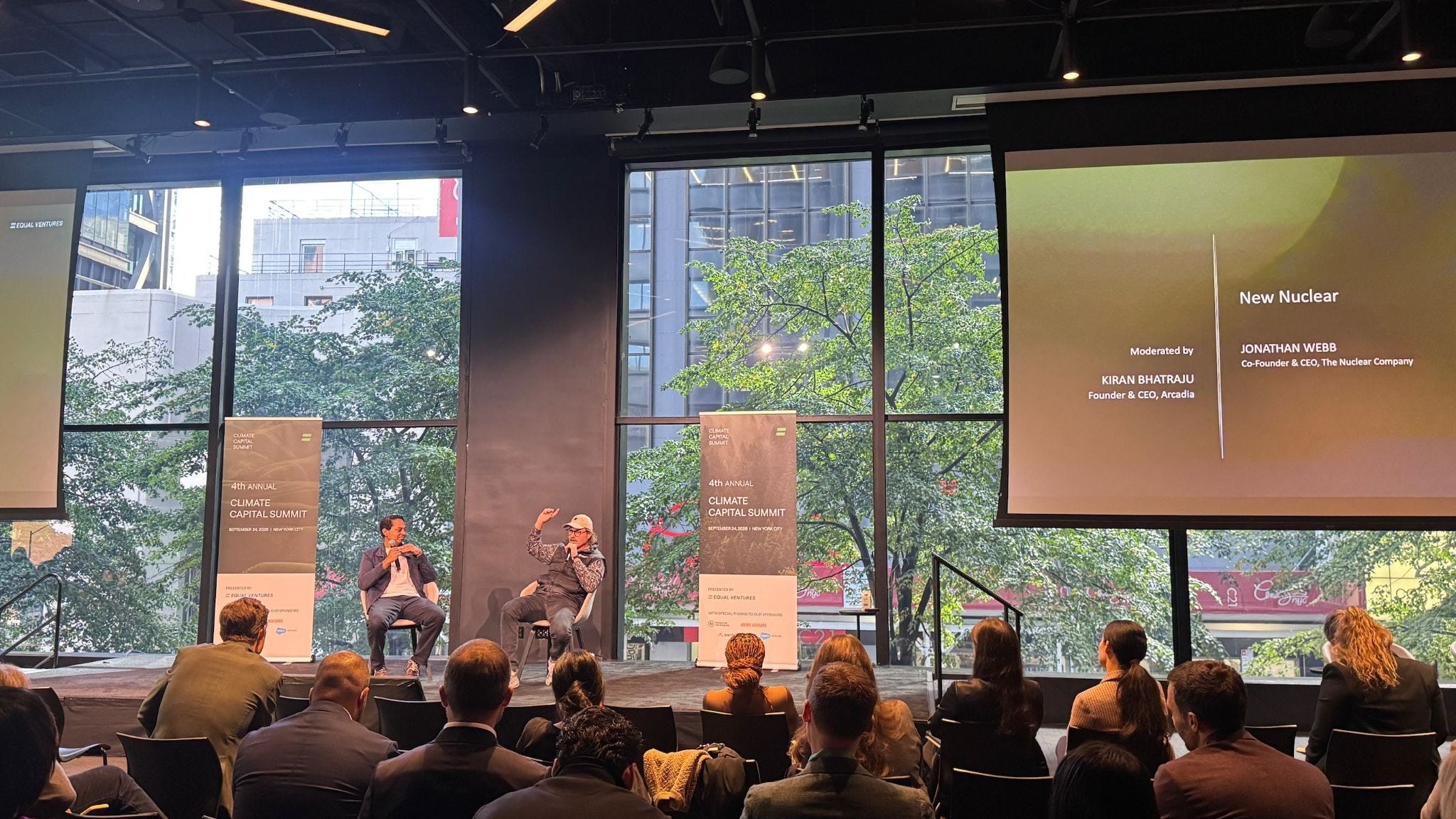
The debate also ran further down the stack than some might have expected. Water came up in several sessions, a sign that cooling, industrial reuse, and scarcity are moving from footnote to core criterion. Nuclear, as expected, stayed top of mind, but the more interesting action has shifted from SMR design headlines to the developers side: The Nuclear Company betting on community support and maniacal execution, Elementl Power advancing a 1.5 GW project in Ohio (World Nuclear News), and Alva Energy uprating existing reactors in under two years are examples of this. Building nuclear plants is well codified at this point, but the companies that make it easy and streamlined will define the category.
3. Capital hasn’t left, it has rotated
There was noticeably less talk of broad pledges and the sustainable economy, and far more about grid software, new nuclear, water, and emerging markets, where energy investment keeps growing even as U.S. investors look inward. The sharpest warning came from a veteran of the industry, who worried that many of today’s climate companies are dramatically overfunded, and urged founders to think harder about incentive alignment and capital structure. A company deploying physical assets on venture equity alone is often carrying the wrong capital for its risk, and the bills and debt collectors will come eventually. The geographic divide was just as hard to miss. With the UN General Assembly running alongside Climate Week, the U.S. conversation was about speed, while Europe’s still centers on process. A joke making the rounds captured it better than any panel could:
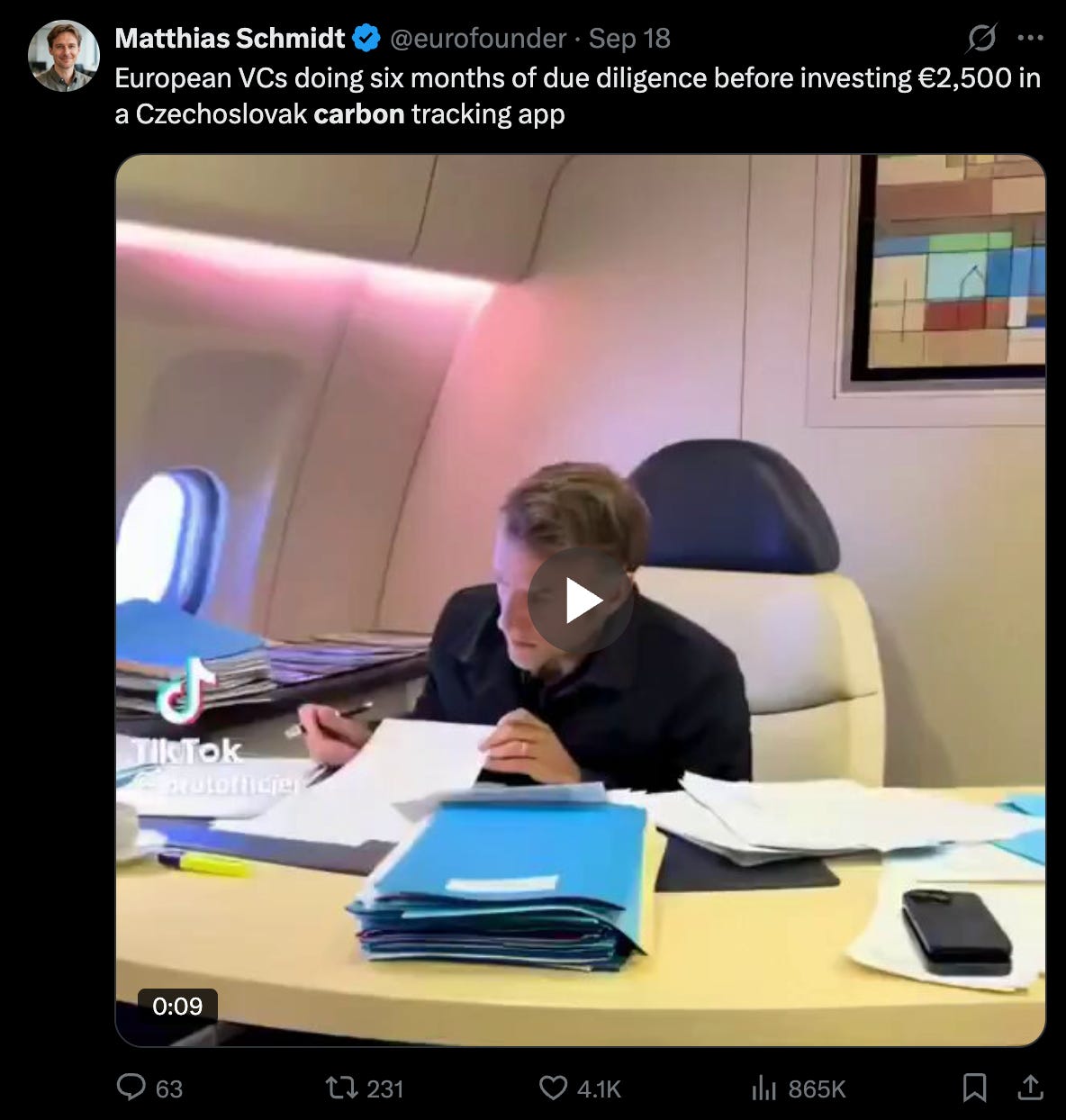
Capital will go where it can be deployed on a predictable timeline with the best return potential.
Semantics aside
The debate over what to call this sector will rage on. Clean tech, climate, national resiliency: the label will keep shifting with the political weather but the need underneath it will not. The demand for power, water, and industrial capacity has never been greater, and neither has the gap between that demand and what the physical economy can deliver today.
The capital stack will continue to be needed to solve that gap. It will almost certainly overrotate on some categories along the way, and some of today’s darlings will be casualties of the reset. But the best capital allocators find where the need is. Right now, that is the real economy, and the builders willing to do the hard work of modernizing it.
A huge thank you to every speaker, attendee, and volunteer who made this year’s summit possible…until next year!
